Tripjyada CMS Staging

Tag: Best Places to Visit in Darjeeling

  • Tihar Festival in Darjeeling – A Cultural Celebration in Hills

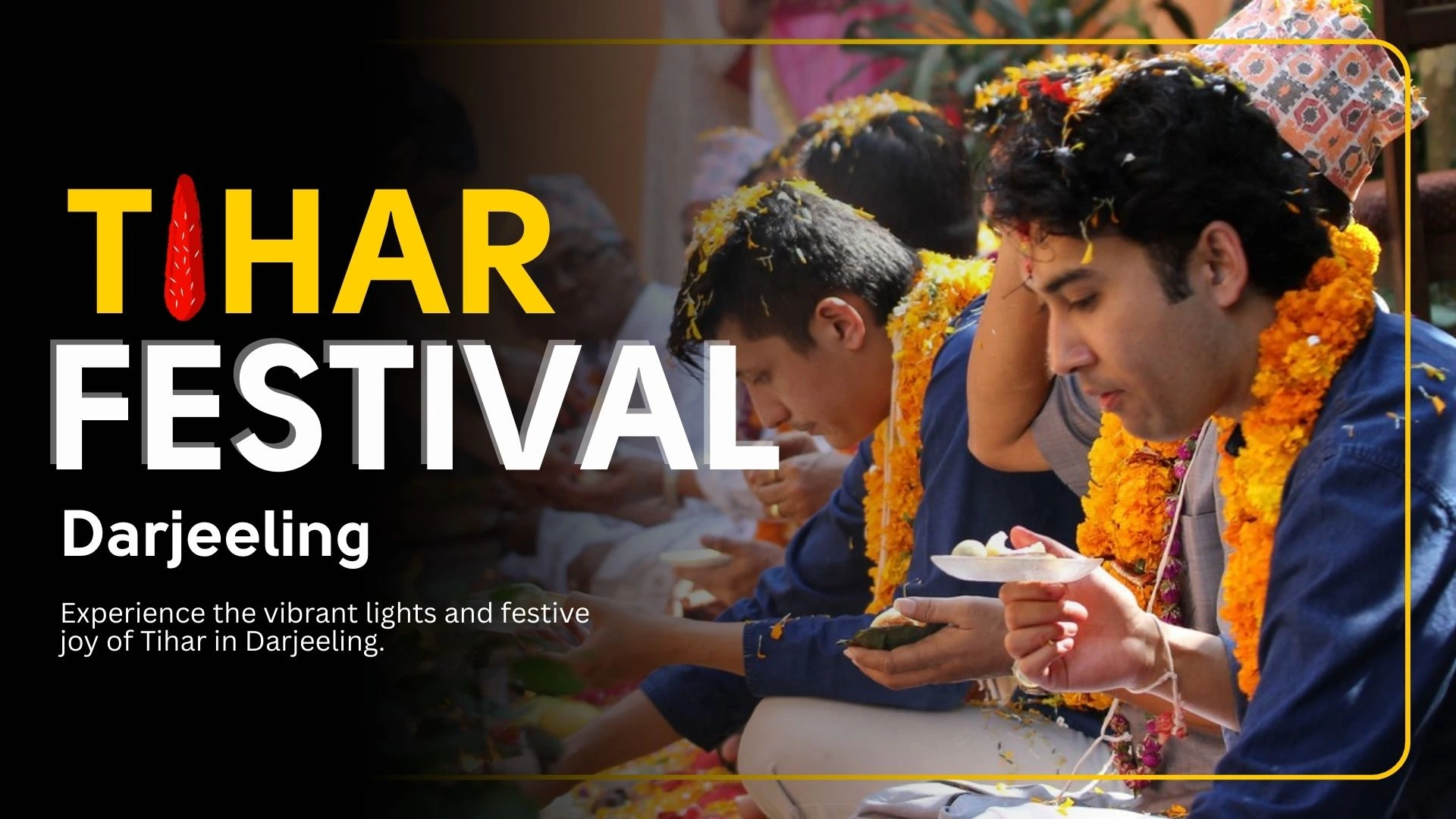
    India is a land where festivals are not just occasions, but soulful celebrations, painting streets with colours, filling the skies with lights, and filling hearts with joy. From Diwali’s sparkle to Holi’s hues, every festival tells a timeless story of unity, love, and tradition. Drums beat, lamps glow, and laughter fills every corner. Hill festivals up in the Himalayas add their own enchantment, with charming villages shrouded in mist, marigold-lit homes, and the sound of camaraderie resonating throughout the valleys. The Tihar Festival in Darjeeling, also known as the hillside Diwali, is one of the most notable of these. One of the most captivating festivals in India, the Tihar Festival in Darjeeling illuminates the Queen of Hills for five radiant days with marigolds, diyas, music, and customs that respect the environment, animals, and family.

    What Makes the Tihar Festival in Darjeeling So Special?

    Nestled in the northern reaches of West Bengal, the Darjeeling district is home to a vibrant Gorkha and Nepali community, whose roots trace back to Nepal. Here, Tihar, also called Deepawali or the “Festival of Lights,” assumes a warm, communal character that is as revitalising as the area’s well-known tea. This festival, which is celebrated over five magical days, reminds us of the profound interconnectedness of all life by honouring not only gods and goddesses but also the animals that coexist with us.

    Imagine waking up with the aroma of sel roti frying in the kitchen, while children are screaming with joy and playing with colourful rangoli. In Darjeeling, the Tihar festival is not only celebrated in temples, but it also spills into the tea estates. Where workers pause their plucking to light lamps and share sweets. This festival is all about gratitude, where respect is given to everyone, from humans to animals, with love and care.

    A Dreamy Journey of Tihar

    Kaag Tihar – Honouring the Messengers of the Skies

    Kaag Tihar is the first day of Tihar in Darjeeling, which is dedicated to the worship of crows. It’s a day when crows are honoured as messengers of Yam, the god of death. People offer them food and pray for good luck and protection from misfortune. The festival is also known as Yama Panchak. In Darjeeling’s misty mornings, the caws echo through the valleys, evoking a quiet reverence. Families start the day with prayers, setting a tone of humility and connection to nature that warms the heart.

    kaag tihar

    Date: October 19, 2025

     Kukur Tihar – A Joyful Ode to Our Furry Friends

    Kukur Tihar means “Day of the Dogs”. This day, local citizens show deep respect and gratitude to canines. Generally, it is the second day of the Tihar festival. Dogs are the most loyal and faithful companions of a person. That day, people use red vermilion tika, mixed with rice and yoghurt, which is placed on their foreheads as a symbol of blessings and respect. Dogs are offered a special meal of their favourite foods, such as meat, eggs, milk, and treats, on this special day. The celebration is a way to acknowledge the cherished relationship between humans and dogs and to pray for their well-being and health.

    kukur tihar

    Date: October 20, 2025

    Gai and Laxmi Puja – Lights, Prosperity, and Divine Blessings

    As incarnations of the goddess Lakshmi, cows are considered to represent prosperity, wealth, and motherhood. Cows are bathed, adorned with garlands, and given a red tika on their foreheads. They are fed special meals, and blessings are sought from them.  That day, people clean and decorate their homes with rangoli to please Lakshmi Devi. Ghee lamp and candles are lit to lighten up the home and welcome the devi. Children and youth groups visit homes in the evening and sing Deusi-Bhailo songs in return for fruits, money, and sweets.

    gai tihar


    Date: October 20, 2025

    Govardhan Puja – Gratitude to Nature’s Guardians

    The fourth day of Tihar is all about showing respect to the silent protectors of life, nature and its guardians. In many homes, oxen are worshipped for their strength and contribution to farming, symbolising gratitude for the fields that feed us. To honour these animals, food offerings are made and colourful rituals are carried out. Some communities also celebrate Mha Puja on this day, a unique ritual of worshipping the self, cleansing away negativity, and embracing inner purity. It serves as a reminder that balance, respect, and harmony with nature are just as important to prosperity as material wealth.

    govardhan puja

    Date: October 22, 2025

    Bhai Tika – The Bond of Siblings That Touches the Soul

    The final day of Tihar is perhaps the most emotional and heartwarming. Known as Bhai Tika, it celebrates the sacred bond between brothers and sisters. Sisters prepare special plates with sweets, fruits, and sacred threads, and lovingly place a seven-colored tika on their brothers’ foreheads, praying for their long life and happiness. Brothers promise love and protection in exchange for gifts and blessings. Joy, laughter, and occasionally tears of appreciation fill the air. Bhai Tika feels particularly magical in the hills of Darjeeling, where families come together, homes are illuminated by diyas, and hearts are warmed by unbreakable love ties.

    bhai tika

    Date: October 23, 2025

    Unique Touch of Tihar in Darjeeling: Blending Hills and Heritage

    The Himalayan twist of Tihar in Darjeeling makes it unique. The festival includes regional features like Lakhe dances, which are more common in Dashain but occasionally spill over into Tihar festivities with masked performers adding a theatrical touch, amid the colonial charm and emerald tea bushes. Traditional Nepali foods such as sel roti (rice doughnuts) and chiura (beaten rice) are staples, often shared with neighbours over cups of steaming Darjeeling tea.

    Families gather around bonfires, singing Deusi songs that combine hill tunes and Nepali folklore, as the cool weather adds to the atmosphere of cosiness.
    >This festival is more than just customs, it is a soul-soothing event that heals splits and restores hope during uncertain times. In order to experience this spectacle, tourists travel to Darjeeling during Tihar, staying in charming homestays and taking part in the celebrations.

    Why Tihar in Darjeeling Will Steal Your Heart

    The way the Tihar Festival in Darjeeling combines nature, culture, and community into a single, radiant celebration is what really makes it unique. It is a festival of hearts as well as lights. In Darjeeling, Tihar is not for one tradition. Whether it’s the Rai, Pradhan, Tamang, Gurung, or Newar families, each community adds its own colour and rhythm to the celebration. The sweet smell of sel roti fills kitchens, garlands decorate homes, and laughter reverberates throughout the hills.

    Every child in the neighbourhood sings Deusi-Bhailo, their voices spreading the same happiness from one house to another. Brothers commit love and protection in exchange for sisters preparing special plates of fruits, nuts, and treats for Bhai Tika. Under the light of countless diyas, Darjeeling citizens, regardless of caste or community, unite as a single, large family during this time of year to celebrate life, ties, and thankfulness.

    If you’re dreaming of witnessing this magical festival firsthand, Tripjyada is here to make your journey unforgettable. From cosy homestays to guided tours across the Queen of Hills, we ensure you don’t just see Darjeeling, you feel it. Alive with colours, culture, and the spirit of Tihar. Come, celebrate the hills with us!
     

  • Why You Should Think Twice Before Solo Travel in sikkim

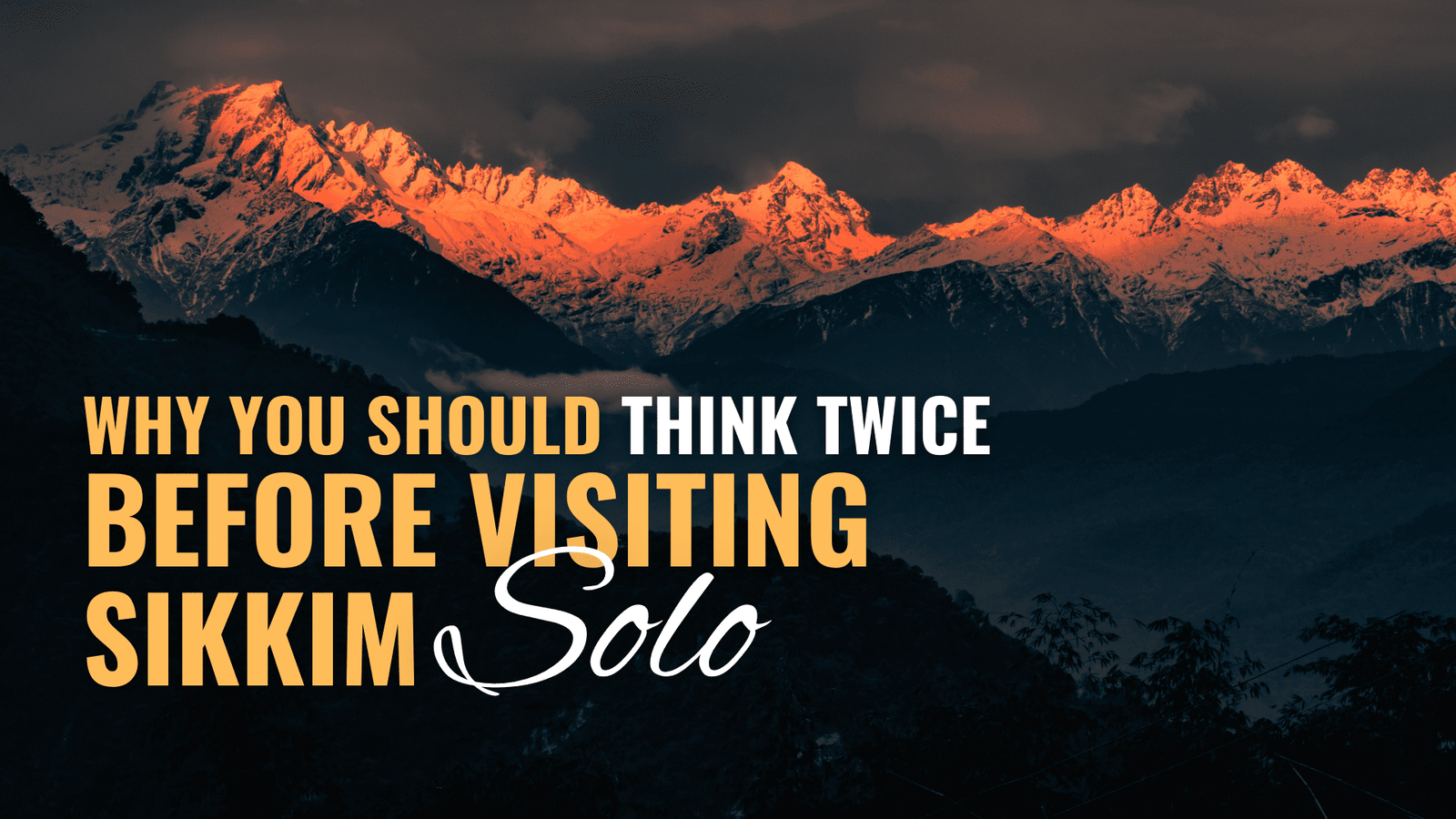
    Stand among the stunning mountains of Sikkim, surrounded by succulent valleys and misty monasteries. Visiting Sikkim is a dream for every traveller, as it is worth experiencing at least once in a lifetime. While a single journey often promises adventure and personal reflection, travelling solo in Darjeeling or Sikkim can be quite challenging. Unique obstacles, including complex permit requirements, rugged terrain, limited connectivity, safety concerns and high costs, can make solo travel difficult. In this guide, we’ll discuss the reasons why solo travel in Sikkim requires additional precautions and provide some practical suggestions for those planning to travel alone. If you prefer trouble trouble-free experience, consider Tripjyada’s Sikkim Tour Package, which can help to ensure that your journey is smooth and safe.

    Key Challenges of Solo Travel in Sikkim

    While Sikkim is breathtaking, single travellers should know about some unique challenges that can affect comfort, safety and cost-evilness. Here is a breakdown:

    Complex Permit Requirements

    • Many iconic attractions of Sikkim, such as Nathula Pass, are located near Gurudongmar Lake and Yumthang Valley, the International Border.
    • Special permits are required to visit these areas, which are usually issued based on a vehicle or group, not for individuals.
    • Permits cannot always be obtained from walking into an office; They are usually arranged through registered travel agents or cab operators.

    Remote and Rugged Terrains

    The geography of Sikkim is amazing but challenging: steep hill roads, rapid decrease and frequent landslides. In such situations, solo travel in Sikkim can be physically tedious and stressful.

    • Some areas are very high (above 15,000 feet), where height disease is a real risk.
    • Solo travellers do not get immediate help in terms of health issues or sudden weather disintegration.
    • Limited connectivity and infrastructure. Mobile networks are high altitude and have patches in rural areas. BSNL and Jio do the best work, but even they fail many times. Therefore, do not expect spontaneous connectivity everywhere in Sikkim.

    Limited Connectivity and Infrastructure

    • Mobile networks are patchy in high-altitude and rural areas. BSNL and Jio work best, but even they fail at times. So, don’t expect seamless connectivity everywhere in Sikkim.

    • Internet speed is often slow outside Gangtok and major towns.

    • ATMs are limited, and card payments are not widely accepted in remote areas.

    Safety Concerns for Solo Travellers

    Sikkim is considered one of the safest states in India, but solo travellers may face challenges :

    • Walking alone on isolated trails without guidance.
    • Difficulty finding help quickly in case of accidents or height related issues.
    • Unaware of local weather, culture and restricted areas.

    Higher Costs for Solo Exploration

    Travel in Sikkim is heavily dependent on vehicle-based exploration. This can be expensive for solo travellers because:

    • Permits are issued vehicle-wise, not per person. If you’re alone, you bear the full cost.

    • Small cars like WagonR or Dzire are not permitted in North Sikkim and Nathula Pass. Only bigger vehicles like Xylo, Innova, and Innova Crysta are allowed throughout Sikkim.

    • In the north and Nathula, Sumo and Bolero are allowed along with Xylo and Innova. However,  these vehicles are not permitted within the boundaries of Gangtok city. They usually leave you at the taxi stand, which means that you have to walk or hire a city taxi again to reach your hotel.

    • Solo travellers cannot easily split costs, making trips significantly more expensive compared to groups.

    For a reliable Sikkim cab service, you can check our trusted taxi service, Northeast Cab.

    Time Restrictions and Rigid Itineraries

    Unlike other destinations where solo travellers enjoy flexible schedules, Sikkim comes with strict time management:

    • Many areas, like Nathula and Gurudongmar Lake, have fixed entry and exit timings for vehicles.

    • Once the route is closed for the day, you can’t continue your journey.

    • As a solo traveller, this limits your ability to explore freely.

    Poor Public Transport

    Government-run public transport in Sikkim is limited and unreliable:

    • Very low frequency of buses.

    • Most remote tourist destinations have no public buses at all, only private/shared cabs.

    • Solo travellers, depending on public transport, may lose significant time waiting or may not even find connections.

    Why Guided Tours Might Be a Better Choice

    Sikkim is beautiful and undisputed, but its challenges, complex permits, rugged terrain, limited connectivity, safety concerns, and high travel costs guide tourism make it a smart option for most tourists. Groups simplify tourism logistics, experts provide guides, and ensure safety in remote areas. They also bring in the spirit of the room, which makes your journey more enjoyable by reducing expenses through cost-sharing.

    With Tripjyada, you will not only get a private and safe travel experience, but you will also get a customised travel plan with an excellent travel experience. This means that you can focus on adventure, whether it is searching for monasteries, trekking to Tsomgo Lake, or soaking in the Yumthang Valley, without worrying about restrictions or plans for obstacles.

    Tips: Always choose two or three friends or travel with family members. Solo travel can be a financial burden for one person.

    In short, while solo travel in Sikkim has limitations, guided or small-group private tours strike the perfect balance of safety, flexibility, and affordability.

    Final tips

    Sikkim is worth discovering, the its enchanting landscape and rich culture, but the single journey comes with obstacles that can affect the experience. Careful planning and caution are required to go alone, ranging from navigating complex permits to dealing with remote areas and managing costs. With preparation, directed tourism provides a safe, more economical and rich manner for the discovery of Sikkim. Are you ready to travel stress-free through this Himalayan heaven?

    For a smooth trip catered to your requirements, look at Tripjyada’s Sikkim tour packages. Make wise plans, drive carefully, and enjoy Sikkim’s allure!


  • Best Sikkim Tour Packages for 2025: Gangtok to Glory

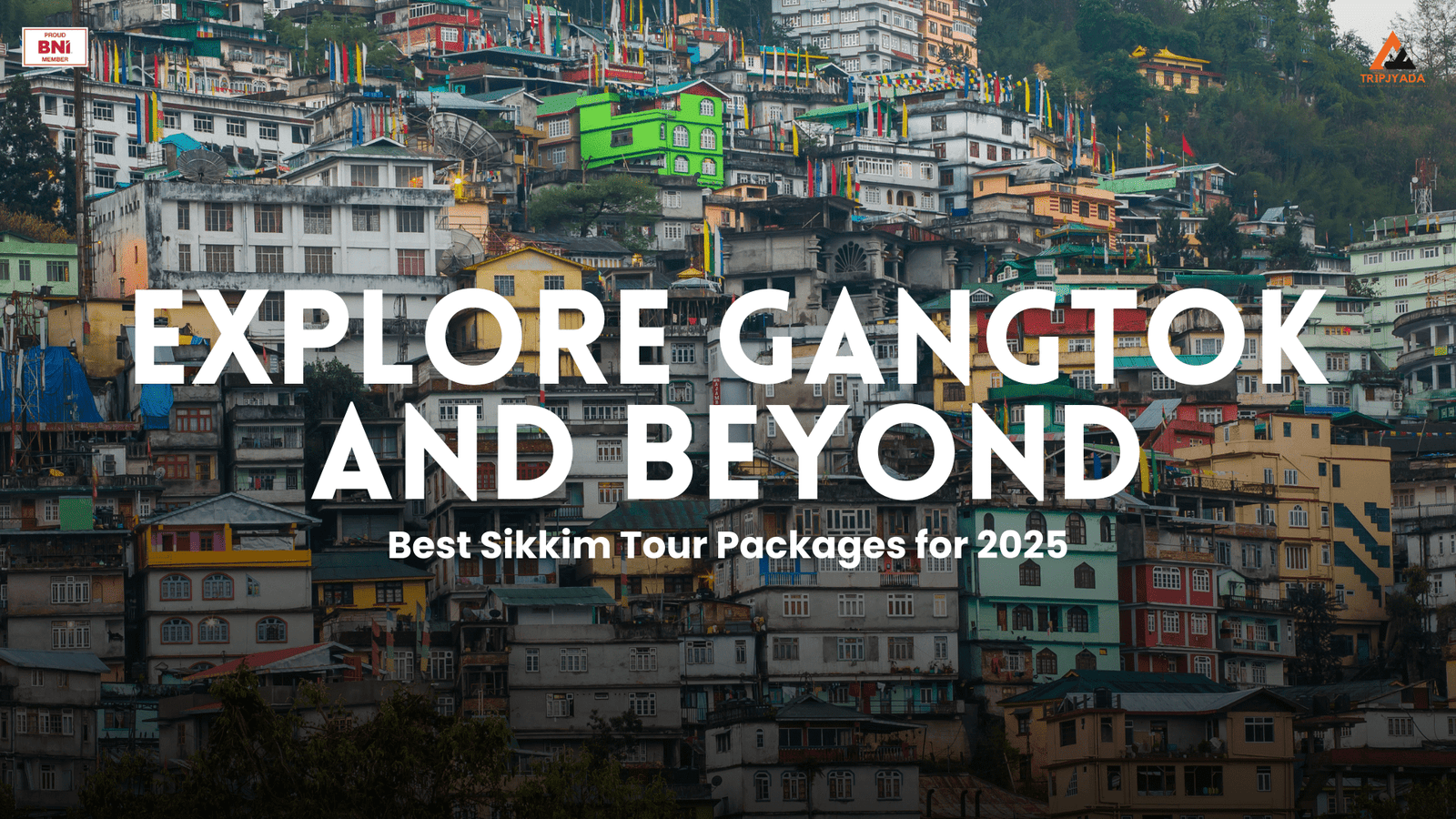
    As we enter 2025, it’s time to venture beyond the typical tourist paths and enjoy the authentic charm of this Himalayan region. And what better place to start than Gangtok, the heart of Sikkim? From then on, the journey only improves. The Best Sikkim Tour Packages allow you to discover not only Gangtok but also the breathtaking scenery that lies beyond.

    Looking for the ultimate Himalayan escape? Then Sikkim should be at the top of your travel itinerary. Sikkim Tour Packages enchanting northeastern state combines snow-capped peaks, meandering mountain routes, serene monasteries, and vibrant local culture to create a postcard-perfect journey.

    So, if you’re looking for a refreshing mountain escape this year, don’t miss out on the Best Sikkim Tour Packages, your ticket to a memorable Himalayan experience.

    Why Sikkim in 2025?

    Sikkim is more than just a destination; it is an emotion, an experience that lasts long after the trip has ended. With increased road connectivity, upgraded tourism infrastructure, and an increasing emphasis on eco-friendly travel, 2025 appears to be the ideal moment to visit this jewel of Northeast India. Sikkim has something for everyone, from the tranquillity of its monasteries to the adrenaline rush of high-altitude lakes and winding mountain passes.

    Sikkim welcomes you with open arms, whether you’re a nature lover looking for calm valleys, an adventurer chasing snowy peaks, or a soul seeking peace and significance.

    Here Are Our Top 5 Best Sikkim Itineraries, Handpicked for 2025 Explorers!

    Our Best Sikkim Tour Package for 2025

    2N/3D Pelling Weekend Trip

    • Day 1: Arrival – Bagdogra to Pelling via Namchi

    • Day 2: Full-Day Pelling Sightseeing

    • Day 3: Departure – Darjeeling to Bagdogra

    5N/6D Pelling Weekend Trip

    • Day 1: New Jalpaiguri Railway Station / Bagdogra Airport to Gangtok – Pickup

    • Day 2: Gangtok to Tsomgo Lake & Baba Mandir – Excursion

    • Day 3: Gangtok to Lachen – Drive with on the way Sightseeing

    • Day 4: Lachen to Lachung – Transfer With Gurudongmar Lake Excursion

    • Day 5: Lachung to Gangtok – Transfer With Yumthang Valley Excursion

    • Day 6: Gangtok to New Jalpaiguri Railway Station / Bagdogra Airport – Drop

    7N/8D Mesmerise Sikkim Trip

    • Day 1: New Jalpaiguri Railway Station / Bagdogra Airport to Gangtok – Pickup
    • Day 2: Gangtok to Tsomgo Lake & Baba Mandir – Excursion

    • Day 3: Gangtok to Lachung – Drive with on the way Sightseeing

    • Day 4: Lachung to Gangtok – Transfer With Yumthang Valley Excursion

    • Day 5: Gangtok to Pelling – Transfer Via Namchi & Ravangla

    • Day 6 : Pelling – Full-day Sightseeing – Darjeeling – Transfer

    • Day 7: Darjeeling – Full day Sightseeing

    • Day 8: Darjeeling to New Jalpaiguri Railway Station, Bagdogra Airport – Drop

    7N/8D Breathtaking Mountain Trip

    • Day 1: New Jalpaiguri Railway Station / Bagdogra Airport to Gangtok – Pickup

    • Day 2: Gangtok to Tsomgo Lake & Baba Mandir – Excursion

    • Day 3: Gangtok – Full-day Sightseeing

    • Day 4: Gangtok to Pelling – Transfer Via Namchi & Ravangla

    • Day 5: Pelling – Full-day Sightseeing

    • Day 6: Pelling to Darjeeling – Transfer

    • Day 7: Darjeeling – Full day Sightseeing

    • Day 8: Darjeeling to New Jalpaiguri Railway Station, Bagdogra Airport – Drop

    8N/9D Best Holiday package

    • Day 1: New Jalpaiguri Railway Station / Bagdogra Airport to Gangtok – Pickup
    • Day 2: Gangtok to changu lake
    • Day 3: gangtok Fullday
    • Day 4: Gangtok to Lachen
    • Day 5: Lachen to Lachung excursion to Gurudumbar Lake.
    • Day 6: Lachung to Gangtok excursion of Yamsang Valley
    • day7: Gangtok to Pelling
    • Day 8: Pelling full day
    • Day 9: Pelling to Ixb

    Easy Tips to Plan Your Sikkim Trip

    • Best Time to Go: March–May for blooming flowers or October–November for clear skies.

    • Permits Made Simple: Indian travellers need an Inner Line Permit for North Sikkim—Tripjyada handles it for you.

    • Getting There: Fly to Bagdogra (2.5 hours from Gangtok) or take a train to New Jalpaiguri.

    • Pack Smart: Bring warm layers, comfy shoes, and a raincoat for sudden showers.

    Why Travel with Tripjyada?

    When you travel with Tripjyada, you are not just planning a trip; you are beginning a story. We believe that travel should be easy, thrilling, and full of tiny surprises that you will remember forever. From the moment you plan your trip until you return home, we handle everything – hotels, permits, transportation, and all the little elements that make a big difference.

    We know Sikkim like the people since we live there. That means we can show you not only the popular spots, but also the quiet tea shops, hidden hikes, and sunrise spots that most visitors overlook. Our itineraries are tailored to you, whether you like relaxing mornings with mountain views or action-packed days exploring valleys and lakes.

    With Tripjyada, your holiday is stress-free, your budget is clear, and your memories are priceless. All you have to do is pack your bag, and we’ll handle the rest.

    Ready for Gangtok’s Glory?

    Ready for Gangtok’s glory? Let Tripjyada transport you there. From the bustling streets of MG Marg to the tranquil heights of Tsomgo Lake, we’ll plan every detail so you can just enjoy the magic. With our local knowledge, pleasant accommodations, and stress-free travel arrangements, your trip to Sikkim will be as smooth as a mountain breeze.

    Book your 2025 Sikkim adventure with Tripjyada today, and let’s turn your dream trip into reality.


  • Celebrate Diwali 2025 Differently: Sikkim, Darjeeling or Bhutan?

    As the season of lights approaches, the air in India begins to shimmer with anticipation. Streets twinkle with fairy lights, rows of clay diyas warm homes, and families meet to share sweets, blessings, and laughter. Fireworks glitter in the night sky, symbolising the joy that Diwali provides to everyone’s heart. It’s no surprise that many people want to escape the mundane and celebrate Diwali 2025 in a special, gorgeous, meaningful, and peaceful location.

    For decades, Shimla and Manali have been popular Diwali escapes. Their pine-scented air, historical elegance, and cold November breezes made them perfect retreats. However, in recent years, the tranquillity that formerly marked these hill stations has been replaced by congested streets, noisy crowds, and tourist overkill. Hotels are reserved several months in advance. The roads are congested with continuous traffic. And what should be a relaxing vacation frequently turns into a stressful, pricey event. The once delicate magic now seems loud and commercial.

    Shimla and Manali are indeed stunning. However, during peak holiday seasons, they’ve become too familiar, congested, and rushed. Do you really want to get stranded in a traffic jam on a mountain route when celebrating Diwali in 2025? Or negotiating for space at a popular sunset spot?Diwali celebrates light, clarity, and harmony. So, why follow the throng when you can stay calm?

    Shimla and Manali are indeed stunning. However, during peak holiday seasons, they’ve become too familiar, congested, and rushed. Do you really want to get stranded in a traffic jam on a mountain route when celebrating Diwali in 2025? Or negotiating for space at a popular sunset spot?Diwali celebrates light, clarity, and harmony. So, why follow the throng when you can stay calm?

    What If You Could Celebrate Diwali Differently?

    What if on Diwali 2025, you did something genuinely unique?

    No honking cars. There are no packed hotels. No more dashing through crowds to catch a sight of fireworks.

    Instead, imagine yourself sipping hot tea in the foggy hills of Darjeeling while watching the sun rise over the snow-capped Kanchenjunga. The weather is chilly, the sky is clear, and you can only hear birds and leaves rustling in the breeze.

    Imagine a calm morning in Sikkim, in a quiet village where monks chant softly and prayer flags flutter over historic rooftops. You wake up slowly, feeling the sun’s warmth on your face rather than a blasting alarm or traffic outside your window.

    And then there is Bhutan. You’re wandering along a peaceful riverbank, the air wafting the aroma of pine and incense. The streets are tranquil. The people smile. You breathe softly and deeply for the first time in months.

    This is not a dream. It is real. And it is waiting for you.

    There’s a more peaceful way to celebrate Diwali 2025—in communities that haven’t forgotten how to pause. In places where light does not only flare and vanish, but remains with you long after the festival has over.

    Welcome to Diwali 2025 in Sikkim, Darjeeling, and Bhutan, where the lights not only shine but also calm the spirit.

    Sikkim – Diwali in a Land of Monasteries and Mountains

    Imagine waking up in the slopes of Sikkim on a crisp November morning. The air is cold but pleasant, with notes of pine, incense, and early sunlight. Firecrackers do not wake you up. Instead, you hear a gentle hum of monks singing nearby, soft and constant, like a heartbeat. In this area of the world, Diwali 2025 feels spiritual rather than boisterous.

    The capital, Gangtok, begins to shine as evening descends. However, it does not function in the same way as city streets. Homes here use butter lights, which are little flickers of flame that dance silently. MG Marg sparkles beneath strings of soft fairy lights, as people walk gently, smiling and sipping sweet butter tea. The shops are open, but nobody hurries. There is time. There is space to breathe.

    As darkness sets, you make your way to a lonely hilltop in Pelling. The skies are clear. And in the distance, the towering Kanchenjunga stands guard, its snow-capped peaks capturing the last rays of sunset light. No smog. There’s no turmoil. Only the mountain, the stars, and the mellow glow of Diwali.

    Here, you don’t just celebrate a holiday; you experience it. Sikkim offers a more personal Diwali experience. Gentle. Soulful. It serves as a reminder that light does not need to be loud to be beautiful.

    Celebrate Diwali 2025 the peaceful way with our customised tour packages to Sikkim for soulful getaways beyond the crowds

    Darjeeling – Tea Gardens, Toy Trains, and Tranquility

    Darjeeling in November is like walking into a dream where time moves a little slower. The crowds are gone. The skies become a clear, limitless blue. And on Diwali 2025, this hill town hosts a heartfelt celebration with minimal disturbance.

    Instead of noisy firecrackers, you’ll hear the gentle rustle of trees around Tiger Hill, where mornings begin with the golden glow of the rising sun kissing the snowy Kanchenjunga. Local homes and cafés along Chowrasta and Mall Road illuminate little diyas on their windowsills, providing a soft glow on the cobbled paths below.

    Local markets around Ladenla Road and Batasia Loop sell handcrafted candles, woolen shawls, and homemade treats with a grin. There is warmth in every nook, not from fire, but from people.

    Board the famed Darjeeling Himalayan Railway, a toy train that slowly travels through mist-covered hills and tea estates. The whistle breaks the silence like a melody, and you sit by the window, sipping warm Darjeeling tea while the world outside turns golden.

    Later, take a stroll through the serene grounds of Peace Pagoda, where prayer flags flutter and peace pervades the air. Or visit Happy Valley Tea Estate, where the aroma of fresh tea leaves lingers in the air.

    And at night, Darjeeling glows, not with noise, but with soul. Paper lanterns illuminate the balconies. Laughter floats from silent cafés. And the hills, drenched in moonlight, seem to be celebrating alongside you.

    Celebrate Diwali 2025 with our specially curated Darjeeling tour packages, perfect for couples seeking romance or groups craving a peaceful mountain escape.

    Bhutan – The Ultimate Peaceful Diwali

    Bhutan does not celebrate Diwali in the same way we do—which is why it could be the ideal place to spend it.

    You’re not running away from the festival. You simply choose to reinterpret it. In a world where happiness is defined by well-being rather than wealth, Diwali 2025 takes on a calmer tone. Something deeper.

    Instead of fireworks, you’ll see prayer flags flying across valleys. Instead of city hubbub, you’ll hear monks singing inside old dzongs, which are huge fortress-monasteries that resonate with centuries of peace. You may spend your days roaming the tranquil streets of Thimphu, seeing religious places in Punakha, or trekking the famed trail to Tiger’s Nest Monastery, which sits like a secret on a cliffside.

    Evenings in Paro shimmer with soft lantern light, and inhabitants move with an unhurried, unbothered pace that feels almost timeless. You can sit by a riverside chorten, breathe in the fresh Himalayan air, and feel your mind calm like it hasn’t in years.

    There are no brilliant lights or booming sounds here. But nevertheless, everything sparkles.

    In Bhutan, Diwali is an interior festival, not a display, but a spiritual retreat. A reminder that light does not necessarily originate from fire. Sometimes it comes from being still.

    Celebrate Diwali 2025 with our exclusive Bhutan tour packages ideal for couples or groups seeking peace, nature, and soulful escapes beyond the festive noise

    Why Choose Tripjyada for Your Diwali 2025 Trip?

    Tripjyada creates more than just tours, we provide cusomised trips full of purpose and beauty. While the rest of the country hurries to congested spots, we will bring you to peaceful retreats like Sikkim, Darjeeling, or Bhutan.

    Our Diwali 2025 trip packages are thoughtfully crafted for couples and groups seeking something unique, peaceful mountain mornings, spiritual sunsets, and authentic local experiences. From handpicked accommodations to dependable drivers and hidden gems, we handle it all.

    Tripjyada transforms Diwali from a holiday to a memory. One that continues to glow even after the lights go out.

    Before You Pack Your Bags

    Take a moment.

    This Diwali, ask yourself what you truly want: more noise, more crowds, or more of the same? Or something softer, something that sticks with you long after the lights go out?

    Sikkim, Darjeeling, and Bhutan are more than simply locations on a map, they are experiences that bring tranquility to the heart of a festival noted for its fervor. They provide peaceful mornings instead of traffic horns, starlit nights instead of city smoke, and a type of light that never fades.

    It’s time to celebrate Diwali based on who you’ve become rather than where everyone else is heading.

    Make 2018 the year you travel not to escape, but to reconnect.
    Let this be the Diwali you’ve always desired.

    Tripjyada is ready to take you there.
    Let’s start your journey with Tripjyada


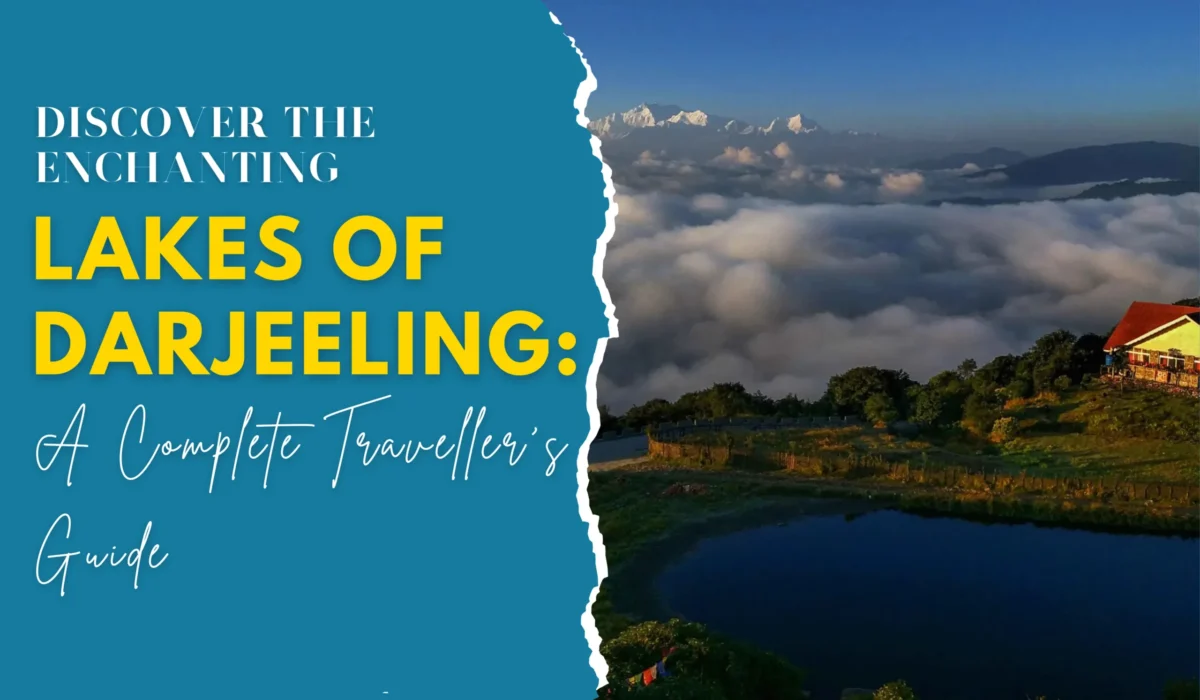
  • Discover the Enchanting Lakes of Darjeeling: A Complete Traveler’s Guide

    Discover the Enchanting Lakes of Darjeeling: A Complete Traveler’s Guide

    Darjeeling, often celebrated for its tea gardens, colonial architecture, and breathtaking views of Kanchenjunga, is also home to several tranquil lakes that offer peace and scenic beauty. These lakes, often overshadowed by the town’s famous viewpoints and monasteries, are hidden gems that provide an immersive nature experience. Whether you’re an adventure seeker, a nature lover, or a photography enthusiast, the lakes of Darjeeling promise an unforgettable experience.

    Let’s explore these mesmerizing water bodies, each with its unique charm and significance.

    1. Senchal Lake: A Reservoir of Natural Beauty

    Nestled within the Senchal Wildlife Sanctuary, Senchal Lake is a major water source for Darjeeling town. This serene reservoir is surrounded by dense forests, offering a perfect retreat for those seeking solitude. The sanctuary itself is home to a rich variety of flora and fauna, making it a paradise for birdwatchers and nature lovers.

    • Best Time to Visit: March to May, September to November
    • How to Reach: Located 10 km from Darjeeling, accessible by car or taxi
    • Highlights: Exotic bird species, trekking trails, proximity to Tiger Hill
    • Travel Tip: Combine your visit with a sunrise trip to Tiger Hill for an unparalleled view of the Himalayas.

    Senchel Lake

    2. Mirik Lake (Sumendu Lake): The Crown Jewel of Mirik

    One of the most famous lakes in the region, Mirik Lake (also known as Sumendu Lake) is a favorite among tourists for its breathtaking beauty and recreational activities. The well-manicured gardens, pine tree-lined banks, and the iconic Rainbow Bridge add to its charm. Visitors can enjoy boating, horseback riding, and simply soaking in the stunning landscape.

    • Best Time to Visit: March to June, September to December
    • How to Reach: Located 49 km from Darjeeling; well-connected by road
    • Highlights: Boating, horse riding, Rainbow Bridge, lush gardens
    • Travel Tip: Visit during sunset for a mesmerizing view of the lake reflecting the evening hues.

    Sumendu Lake ( Darjeeling )

    3. Jorpokhri Lake: The Twin Ponds of Tranquility

    Perched atop a hill, Jorpokhri Lake derives its name from ‘Jor’ (meaning two) and ‘Pokhri’ (meaning pond). This scenic spot offers panoramic views of Mount Kanchenjunga and is home to the rare Himalayan Salamander. The area around the lake is a peaceful retreat away from the bustling tourist spots.

    • Best Time to Visit: October to April
    • How to Reach: 20 km from Darjeeling; accessible by road
    • Highlights: Twin lakes, biodiversity, peaceful surroundings
    • Travel Tip: Spend a night here to enjoy the calm atmosphere under the starry sky.

    Jorpokhri Lake

    4. Singalila Lake: A Trekker’s Paradise

    Located within the Singalila National Park, this lake is a hidden treasure for trekking enthusiasts. Accessible via the Sandakphu-Phalut trekking route, it offers breathtaking views of Mount Everest, Kanchenjunga, and lush rhododendron forests. This untouched beauty is a must-visit for nature lovers.

    • Best Time to Visit: March to May, September to November
    • How to Reach: Through the Sandakphu trekking route
    • Highlights: Trekking, Himalayan views, diverse flora and fauna
    • Travel Tip: Hire a guide to explore hidden trails and make the most of your adventure.

    Singalila Lake

    5. Jamuni Lake: A Rising Eco-Tourism Destination

    Jamuni Lake is an emerging tourist attraction in Darjeeling, developed as an eco-tourism project. Surrounded by lush greenery and tea gardens, it’s a great spot for picnics, boating, and relaxation. The nearby natural hot water springs add to its appeal.

    • Best Time to Visit: October to April
    • How to Reach: 12 km from Darjeeling, easily accessible by road
    • Highlights: Boating, picnic spots, hot springs
    • Travel Tip: Visit during festivals to witness the local cultural events held around the lake.

    Jamuni Lake

    6. Rongo Lake: A Hidden Gem in the Hills

    Rongo Lake, located in the Kalimpong district near Darjeeling, is a lesser-known but picturesque destination. The surrounding forest and cardamom plantations make it a unique spot for eco-tourists and adventure seekers.

    • Best Time to Visit: March to June, September to November
    • How to Reach: 50 km from Darjeeling, best reached via Kalimpong
    • Highlights: Dense forests, cardamom plantations, peaceful ambiance
    • Travel Tip: Carry binoculars for birdwatching opportunities in the nearby forest.

    Rongo Lake

    7. Todey Lake: The Offbeat Paradise

    Situated close to the Indo-Bhutan border, Todey Lake is an untouched paradise surrounded by tea estates and hills. It is an ideal place for offbeat travelers looking to explore nature away from the usual tourist circuit.

    • Best Time to Visit: October to March
    • How to Reach: 80 km from Darjeeling, via Kalimpong and Neora Valley
    • Highlights: Offbeat location, scenic landscape, rare flora and fauna
    • Travel Tip: Combine your visit with a tour of the Neora Valley National Park.

    Why You Should Explore the Lakes of Darjeeling?

    Each of these lakes offers a unique experience, from adventure-packed trekking trails to serene picnic spots. Unlike the high-altitude lakes of Sikkim, Darjeeling’s lakes are easily accessible and nestled within lush green valleys, making them ideal for travelers of all kinds.

    Plan Your Darjeeling Lake Tour with Tripjyada

    At Tripjyada, we offer customized travel packages that let you explore the hidden gems of Darjeeling in the best way possible.

    Why Choose Us?

    • Tailor-Made Itineraries: Personalized travel plans to suit your preferences.
    • Experienced Guides: Local guides who bring deep knowledge of the region.
    • Comfortable Transport: Reliable and scenic journeys across Darjeeling.
    • Budget-Friendly Packages: Affordable rates without compromising on experience.

    Connect Your Journey: From Sikkim to Darjeeling

    If you’ve already explored the majestic lakes of Sikkim, a Darjeeling lake tour is a perfect extension of your trip. Don’t forget to check out our blog on Sikkim’s Best Lakes to plan a complete Northeast India travel experience.

    Final Thoughts

    Darjeeling’s lakes, though lesser-known, offer a serene escape amidst nature. Whether you’re looking for adventure, relaxation, or simply stunning landscapes, these lakes should be part of your itinerary. Ready to embark on this peaceful journey? Book your trip with Tripjyada today. I