Festivals represent the essence of a nation. To bring together festivals such as Diwali, Durga Puja, and Holi in India by brightening the environment with music, colours, and lights. Nonetheless, festivals in Bhutan possess an enigmatic essence as they relate to spirituality, age-old legends, and lively traditions. The Tshechu Festival is the most renowned celebration in Bhutan. If you are thinking about visiting Bhutan, the Tshechu Festival 2025 promises a memorable experience that brings history, culture and trust to life.
What is the Tshechu Festival?
The word Tshechu means “tenth day” and this festival is celebrated 10th day of a lunar month of the Bhutanese calendar. This was in honour of Guru Rinpoche (Padmasambhava), a saint, who introduced Buddhism from Bhutan in the 8th century. While every district celebrates its own celebrations, the grandeur of Paro Tsachu in the spring and Thimphu Tsachu in the autumn attracts the largest crowd. Other regional programs such as Punakha Tsachu, Gangeti Tschu and Wangdue Tashchu.
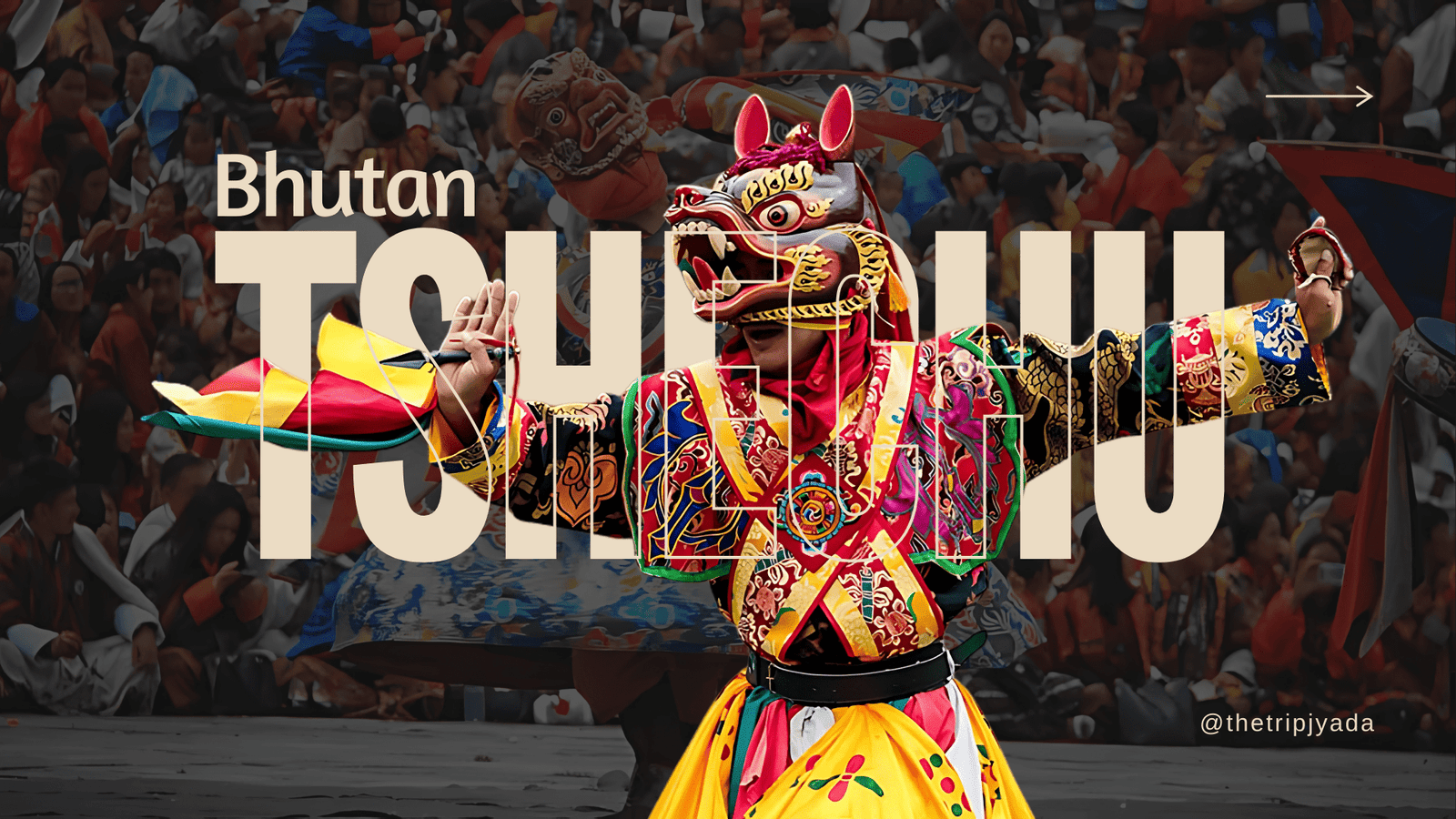
Crimson begins the holy cham dance in the courtyard as monks in Robes. These masked performances are not only in the theatre, but also in action. The dance of the Lords of the Cremation Grounds reminds the crowd of life’s fickleness, while the dance of the Black Hat magician controls evil spirits. The red-masked gestors, known as Etsaras, entertain the humour with holy in these serious moments, reminding everyone that happiness is also divine.
Major Tshechu Festivals 2025 in Bhutan
Every valley of Bhutan beats with its own rhythm of Tshechu, yet each carries the same devotion to Guru Rinpoche. As you wander through the mountains, the festivals unfold like chapters of a living story.
Paro Tshechu – The Spring Awakening
This Tsachu is one of the most famous celebrations of Bhutan, held in March or April. Paro Dzong’s courtyard is alive with holy cham dance, moving costumes and echoed beats of traditional drums. At dawn on the last day, the monks unveiled thongdrols on a large scale, a sacred silk painting, which blesses thousands of devotees collected from near and away. For many travellers, seeing this holy moment is the main attraction of their visit to Bhutan.

Time to visit: Mar 29, 2026 – Apr 02, 2026
Thimphu Tshechu – The Autumn Splendour
Most of the important event in the history of Bhutan is the Thimphu Tshechu. This is held in honour of the famous religious figure Padmasambhava (aka Guru Rinpoche), often referred to as the ‘second Buddha’ by many. To participate to the best of their abilities, many of the attendees to the festivities wear ceremonial kiras & ghos, representative dress which show the identity & history of the nation of Bhutan. The The Special honour is reserved for the Chams as the dances are the dances celebrated as the apex of happiness within the celebration and represent the crowning of love & peace for all.

Time to visit: Oct 02, 2025 – Oct 04, 2025
Punakha Tshechu – Where History Lives
It is the most valuable and most vibrant festival of Punakha. This festival shows the rich culture and tradition of Bhutan. Punakha Dzong hosts this three-day festival to honour Guru Rinpoche and commemorate Bhutan’s 17th-century military victory.The festival involves the dramatic revival of historical events with sacred rituals. Mo Chu Chu Chuch flows on either side of the fort with rivers.

Time to visit: Feb 27, 2026 – Feb 28, 2026
Gangtey Tshechu – The Valley of Cranes
Gangetey Tsachu is more spiritual and more intimate than other Tsachu festivals. Here you can see the main spirituality of Bhutanese rituals. Phobajika Valley, Winter House for Black Neck Crane, adds a unique attraction to the festival. Pilgrims, monks, and travellers gather in the Gangeti monastery to dance masks, which tell the stories of compassion, knowledge and the eternal dance of life. For nature and culture lovers, this festival mixes spirituality beautifully with the untouched beauty of Bhutan.

Time to visit: Oct 05, 2025 – Oct 07, 2025
Wangdue Tshechu – The Festival of the People
Wangdue Tsachu is often described as a festival of common people. Known for its lively community participation, it reflects the heart of Bhutani rural life. This festival is celebrated in honour of Guru Padmasambhava, who took Tantric Buddhism to Bhutan. This festival reflects the heart of Bhutanese rural life. The unveiling of the Thongdrol here deeply moves devotees, as they believe it cleanses all sins and grants blessings with a single glance. Unlike the grandeur of Thimphu or Paro, the Wangdue Tsachu Festival seems warm, welcoming and laughing.

Time to visit: Sep 30, 2025 – Oct 02, 2025
Talo Tshechu – Songs of the Hills
Talo Tsachu is a three-day annual Buddhist festival held in the Talo Math. Above Punakha, the tranquil village of Talo bursts into life every spring. Talo Tsachu stands out for its deep spiritual atmosphere, intimate settings and beautiful performances. This festival carries the music soul with a mask dance filled with joy. For travellers, Talo Tsachu feels like stepping into a Bhutanese story, colourful, sweet and deeply spiritual.

Time to visit: Mar 26, 2026 – Mar 28, 2026
Druk Wangyel Tshechu – Dances Among the Clouds
Druk Wangyel Tshechu is held in honour of His Excellency Jigme Singa Wangchuk and the Royal Bhutan Army for a successful military campaign. Dochula is surrounded by 108 Chartenses and Snow-Clad Himalayan peaks held at Dochula Pass, the Druk Wangial Tsachu is contrary to any other. Imagine a memorable mixture of history, devotion, and beauty because the monks dance holy cham while flowing on the mountains in the clouds.

Time to visit: Dec 13, 2025
Haa Spring Festival – A Celebration of Life
One of the most vibrant ceremonies in this state is the Ha Spring Festival (in the east, Ha Summer Festival). It provides a unique insight into the annual program, Bhutani traditions, arts, and way of life, held in the picturesque Ha Valley. A hidden treasure of Bhutan is a spring festival, which brings life -colored facade dances, sacred rites and blooming valleys. Travellers can enjoy a real, uncontrolled Tshechu experience surrounded by the natural beauty of spring in the Trancuel Ha Valley, where residents celebrate culture and devotion.

Time to visit: April 7, 2025 – April 9, 2025
Jakar Tshechu – Heartbeat of Bumthang
Jakar Tashchu is one of the most spiritual and culturally lively festivals of Bhutan. Conducted in Zakar Dazong, known as the “Fort of White Bird”, the three-day festival brings the local people and travellers together to celebrate faith, tradition and community through sacred dances and religious rituals. Town Vibrant wears clothes in keys and ghos, retailing the timeless legends of Bhutan as mask dancers. More than just one festival, Tsachu is a community program, where celebration and belief co -existence, such as SpringTime infects the mountains with new life.

Time to visit: Oct 29, 2025 – Nov 01, 2025
Kurjey Tshechu – The Sacred Imprint
Kurjey Tsachu is a one-day festival. Monks usually hold it in Kurjey Lhakhang. It is a sacred monastery in the Bumthang Valley.This was the place where the Guru Ringpoche meditated and paid attention. The calm Bumthang Valley becomes a living tapestry of culture, spirituality and social celebration. Kurji Tsachu is more than a festival, it is a sacred reunion of faith and culture.

Time to visit: Jun 24, 2026
Why Experience the Tshechu Festival 2025 in Bhutan?
2025 Tshechu Festival is the discovery of the soul of Bhutan. The festival is a living exhibition of culture, from colourful textiles to exciting archery competitions. The holy cham dance atones for sins and grants the best blessings. Crimson Rob and a moving mask make ancient Dzongs everywhere a visual feast that you see. Nevertheless, Tshechu is more than a spectacle; It is a celebration of the community, where laughter, prayer and tradition basically mix. In every drug and dance, the festival keeps the past and current bridges, keeping the timeless heritage of Bhutan alive.
The Last Drumbeat
Tshechu Festival Bhutan 2025 exceeds a festival; It is a journey in the spiritual heart of Bhutan.
Thimphu Tsachu Festival 2025 experiences the living traditions of Bhutan through the glory of 2025. The historical attraction of Punakha Tsho Festival 2025, or the calm beauty of the Gangte Tsachu Festival 2025. It is a means of preserving Bhutan’s own culture because masks, drum, and monks perform their sacred dances.
Step in the rhythm of Bhutan with Tripjyada, and experience the Tsachu festival, a celebration of culture, belief, and pure Himalayan surprise, which will resonate in your memories forever.